epanet-js
No installs. No forced cloud storage. Just fast, local-first water modeling — powered by the engine you already trust.
You shouldn't have to choose between speed, security, and affordability just to understand your water networks.


: Two USB 2.0 ports and integrated DVB-S2 demodulator.
Unplug the serial wires and restart your receiver to complete the process. Troubleshooting Common Errors 1. Serial Handshake Fails / No Progress Bar loader gx6605s
The primary reason users seek out a loader is to perform a "deep flash" recovery on a bricked device. The following steps, compiled from various community guides and official instructions, outline the standard recovery procedure for a GX6605S receiver using the RS232 COM port. : Two USB 2
: For technical users, the loader is a essential tool for "unbricking" or modifying low-cost Chinese satellite receivers, turning them into capable media players or development platforms. Key Features at a Glance 1080p HD Support Delivers high-definition visuals for modern TVs. Fast Channel Switching Reduces buffering and improves navigation speed. Multilingual Interface Supports 10+ major languages for global accessibility. Low Power Consumption Reduces operating costs and heat buildup. Serial Handshake Fails / No Progress Bar The
On the eve of the decommission, the receiver offered one last, magnificent broadcast: a chorus of voices, overlapping across decades — a wedding vow turned into a news snippet morphed into a shipping forecast and back into nursery rhymes. It sounded like a town's lifetime compressed into a single breath. People wept openly; lantern light trembled on the water. When the final note faded, the GX6605S gave a soft mechanical sigh and returned to regular static.
Open the receiver case. Look for a 4-pin header labeled one of the following: J1 , JATG , UART , RX/TX , or DEBUG . The pins are typically:
(Power the box via its standard power supply) How to Use the GX6605S Loader Tool
No setup or downloads — just instant access right in your browser.
EPANET was a gift to the industry — free, open-source water modeling for all. But commercial vendors built on it, locked away improvements, and left the community behind.
epanet-js is our answer: a faster, simpler, affordable water modeling tool that protects your privacy and sustains the open-source future of water modeling.
We're proud to be part of the next chapter — and we're just getting started.

When you purchase more features in epanet-js, you're investing in the future of open-source EPANET development.
Our open-source model balances innovation and accessibility:
Anyone can build on our code. The two-year commercial-use delay gives us the incentive to keep pushing forward — and that fuels progress for everyone.
That means when you support us, you support more affordable hydraulic modeling software for the entire community.
Choose the plan that works for you
Individual named license
Floating shared license
Have questions? or book a call.
Available for non-commercial projects, learning, and student work.
For curious minds and personal growth.
Free for students and teachers.
Find answers to common questions about epanet-js.
No install. No login. No cloud required.
You may not know this, but for decades, the U.S. EPA has given the water industry an extraordinary gift: the free and open-source hydraulic modeling software EPANET. Odds are, if you've used any commercial hydraulic modeling software today, it was built on the EPANET engine.
The problem is, instead of giving back to their open-source roots like other industries do, big-name software vendors took EPANET's open code, built private tools on top of the engine, and then locked those improvements behind patents and proprietary licenses.
Some vendors even pressured the EPA to focus only on the engine — discouraging any effort to improve the interface or user experience for everyone else.
Those vendors now charge you exorbitant prices to use their software while EPANET lags behind — and utilities, engineers, and educators with smaller budgets suffer.
We think this is backwards — and we're on a mission to change it. We're focused on creating a better experience for the entire hydraulic modeling community.
That's why we built epanet-js under an FSL license — because we want to give you an affordable, easy-to-use water modeling option that creates a sustainable future for open-source EPANET development.
Support EPANET by using software that supports it back.
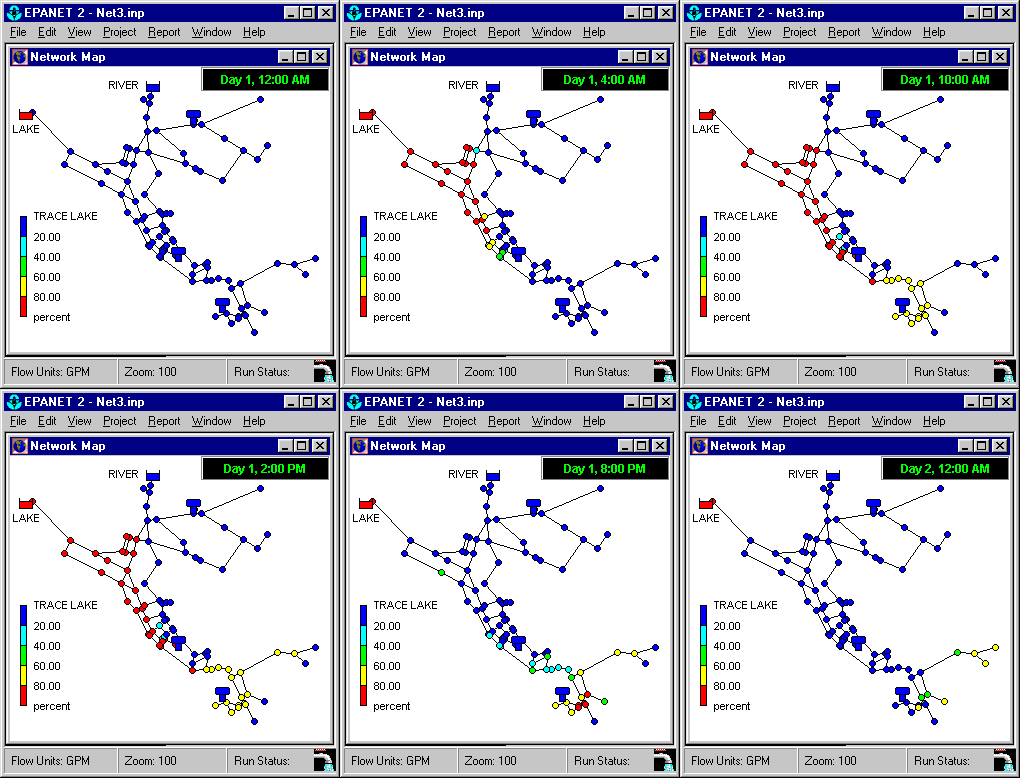
Simple, quick, and useful right out of the gate — designed to open-and-go.
Launch epanet-js now